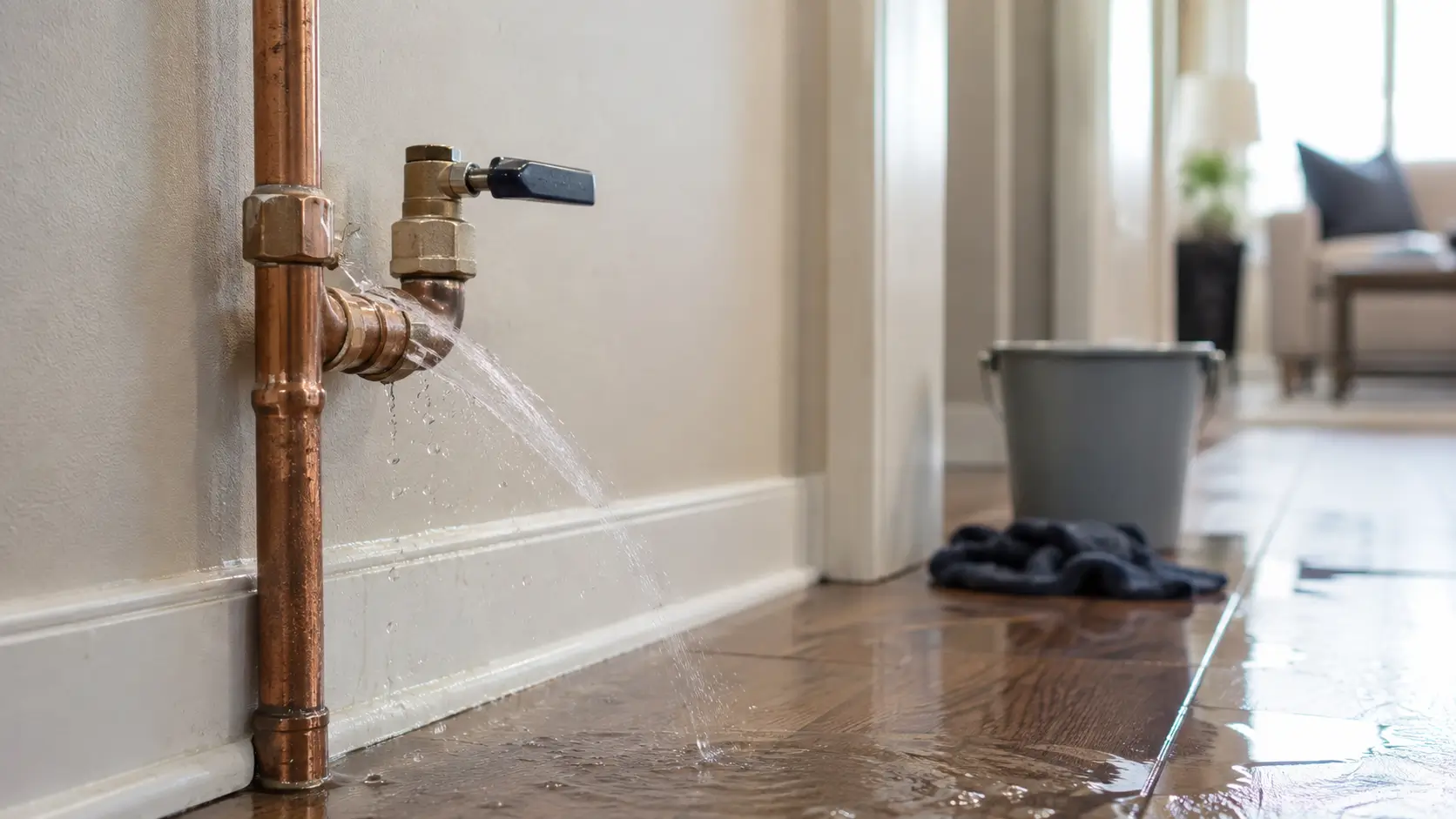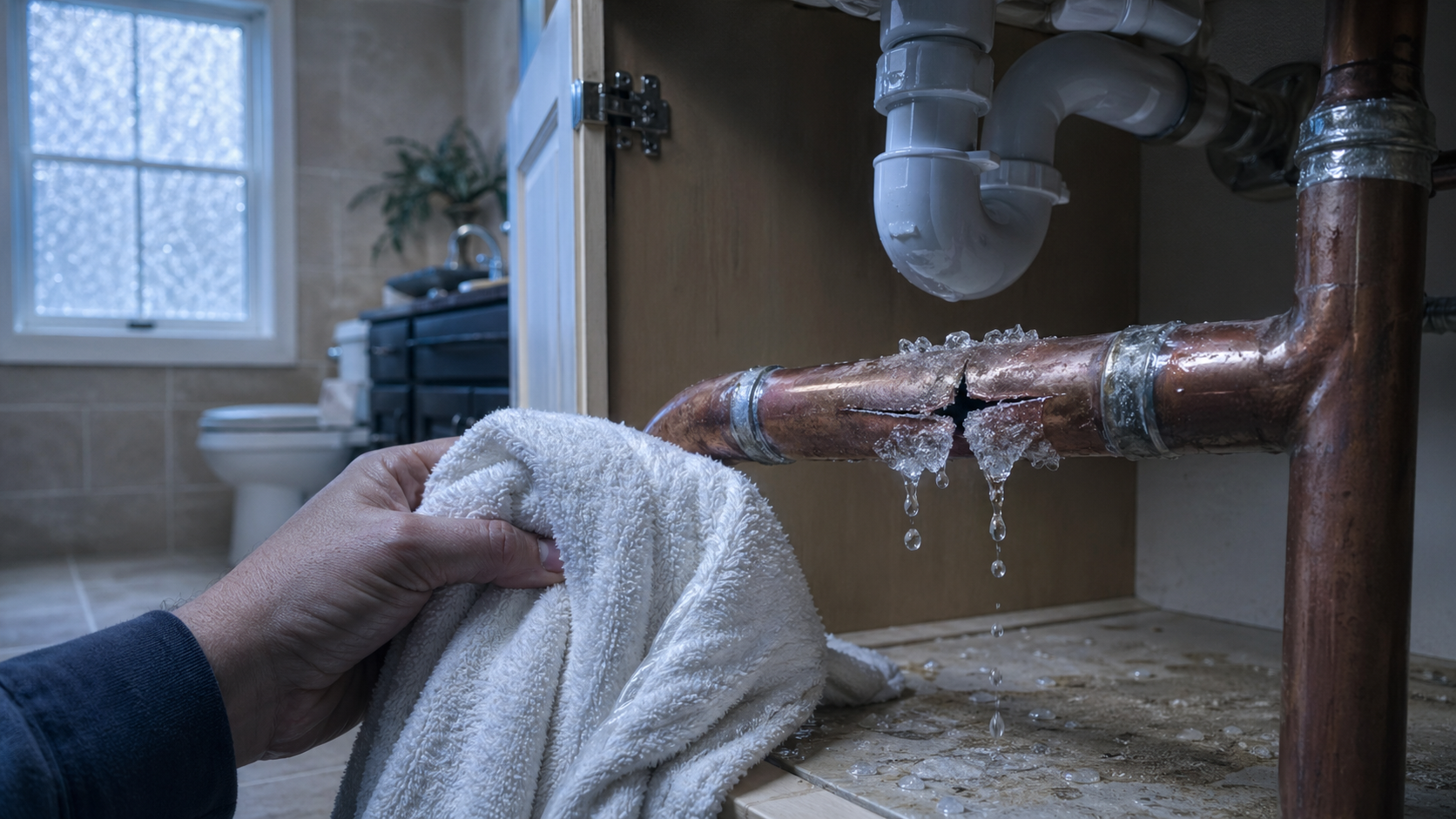
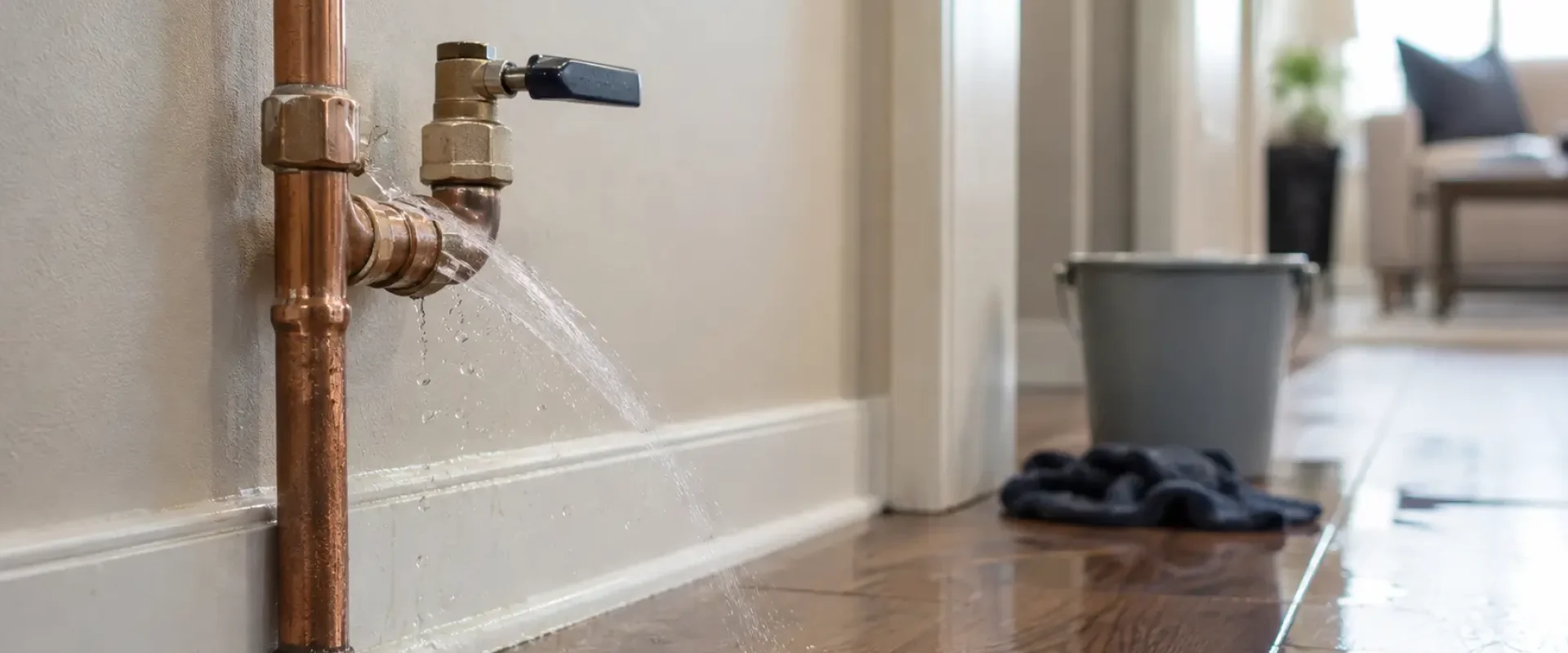
If a pipe bursts in your Georgetown home, shut off the water first. Then keep away from electrical hazards, stop using plumbing fixtures, move belongings out of the wet area if it is safe, and document the damage.
You do not need to find the exact break or repair the pipe yourself before calling a plumber. Your job is simply to stop more water from entering the home and keep the situation from getting worse.
Here is what to do.
Quick Answer: What Should You Do When a Pipe Bursts?
If water is actively leaking:
- Shut off your main water supply.
- Stay away from standing water near electrical equipment.
- Open a faucet to relieve pressure after the water is off.
- Move belongings away from the leak if the area is safe.
- Take photos, then call an emergency plumber.
If you cannot safely reach the shut-off valve or water is spreading near electrical equipment, stay out of the affected area and call for help.
1. Shut Off the Main Water Supply
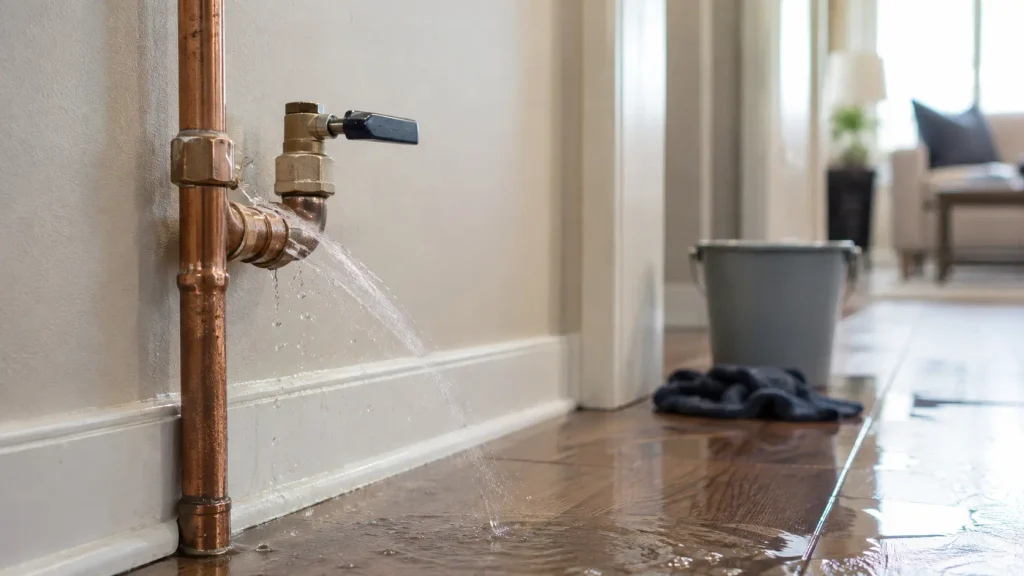
The fastest way to limit damage from a burst pipe is to stop the flow of water into the house.
Find your home’s main water shut-off valve and turn it off.
Depending on the property, the valve may be:
- Near the water meter
- In the garage
- Along an exterior wall
- Inside a utility area
- Near where the main water line enters the home
A lever-style ball valve normally shuts off with a quarter turn so the handle sits perpendicular to the pipe. A round valve typically closes by turning clockwise.
Once the water is off, do not turn it back on just to see whether the pipe still leaks.
If the valve is stuck, damaged, or you cannot find it quickly, call an emergency plumber.
2. Check for Electrical Danger Before Entering the Area
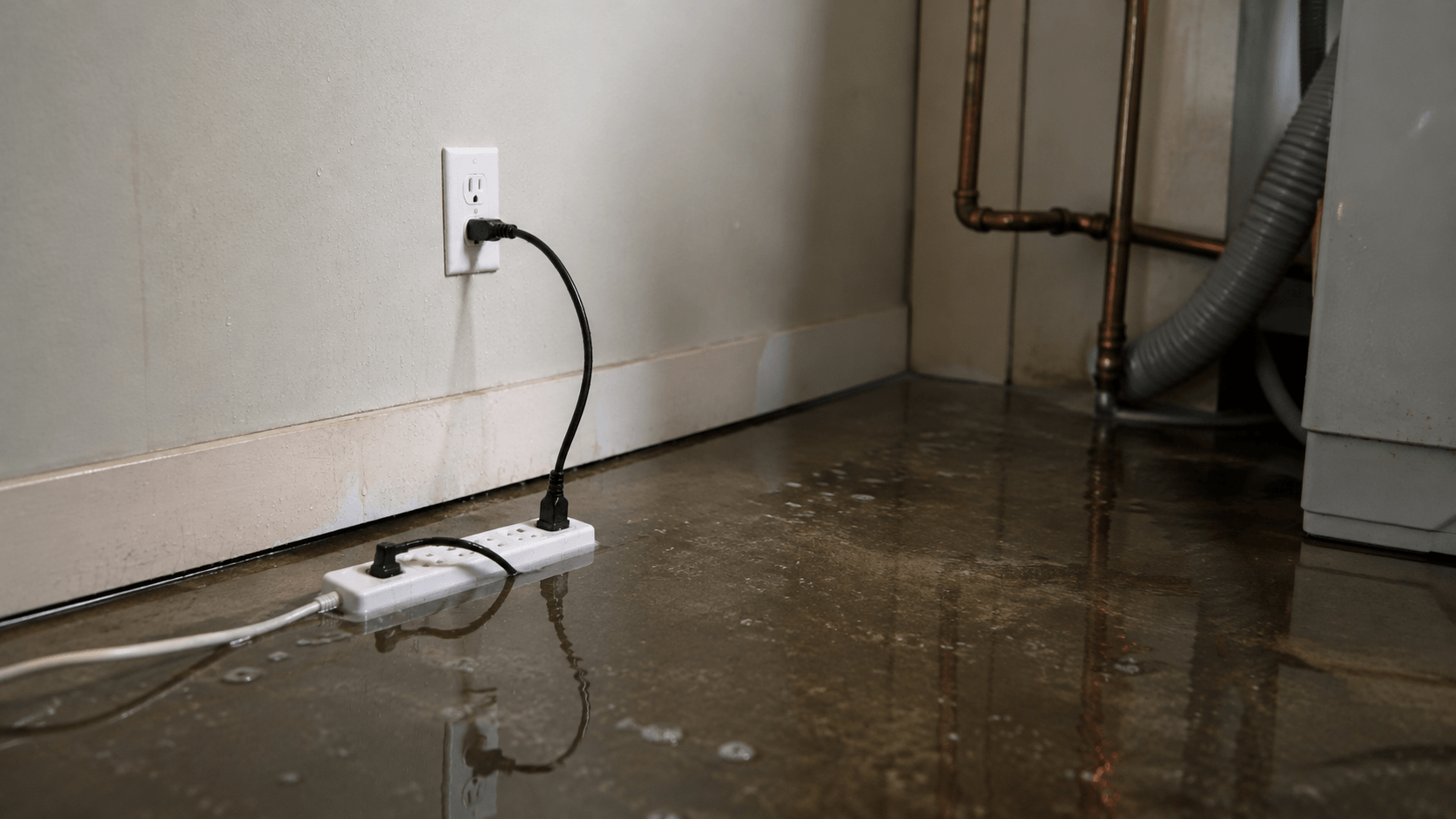
Do not walk through standing water when electrical equipment is nearby.
Keep away from water around:
- Outlets
- Extension cords
- Power strips
- Appliances
- Breaker panels
- Water heaters
- HVAC equipment
- Washers and dryers
Do not reach into standing water to unplug something.
If the burst pipe is leaking into an area with electrical equipment, keep your distance and get professional help rather than trying to control the leak yourself.
3. Relieve Pressure and Stop Using Water
After shutting off the main supply, open a nearby faucet to allow remaining water and pressure inside the plumbing system to drain.
Then leave the home’s water supply off until the damaged pipe has been inspected.
Avoid using:
- Toilets
- Showers
- Faucets
- Washing machines
- Dishwashers
- Outdoor faucets
- Irrigation systems
You also should not repeatedly turn the main water back on to test the leak. That can send more water into damaged walls, flooring, ceilings, or cabinets.
4. Limit Water Damage Without Putting Yourself at Risk
Once the water supply is off, you can protect nearby belongings if the area is safe.
Move items such as:
- Rugs
- Furniture
- Electronics
- Boxes
- Clothing
- Important documents
- Items stored under sinks or cabinets
Buckets and towels may help with a small amount of remaining water.
However, do not spend time trying to catch water if a ceiling is sagging, water is near electricity, or the affected area appears unsafe.
Stopping the source matters more than trying to clean everything immediately.
5. Take Photos, Then Call a Plumber
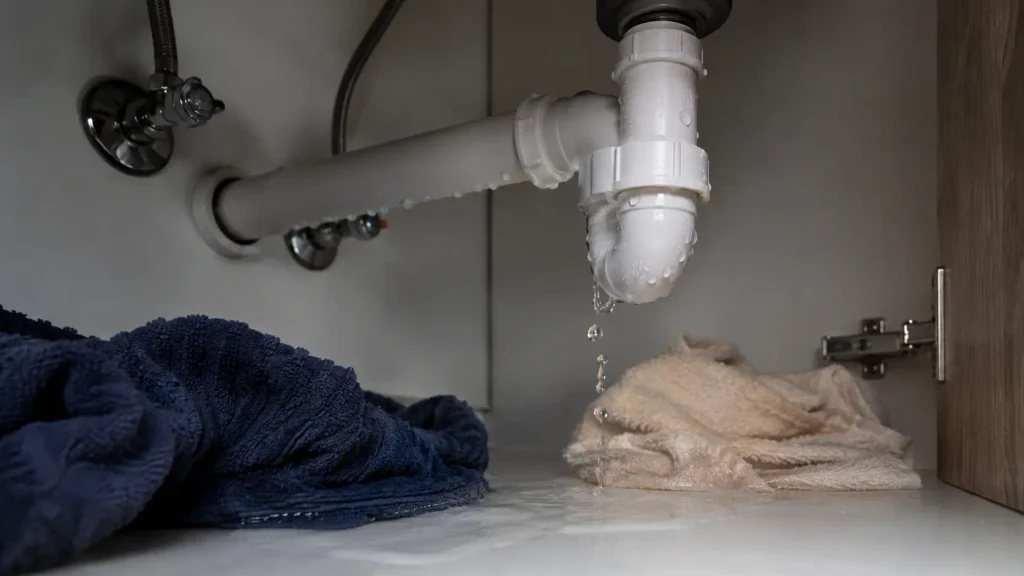
Before moving or cleaning damaged materials, take a few photos or short videos.
Document:
- Where the water appeared
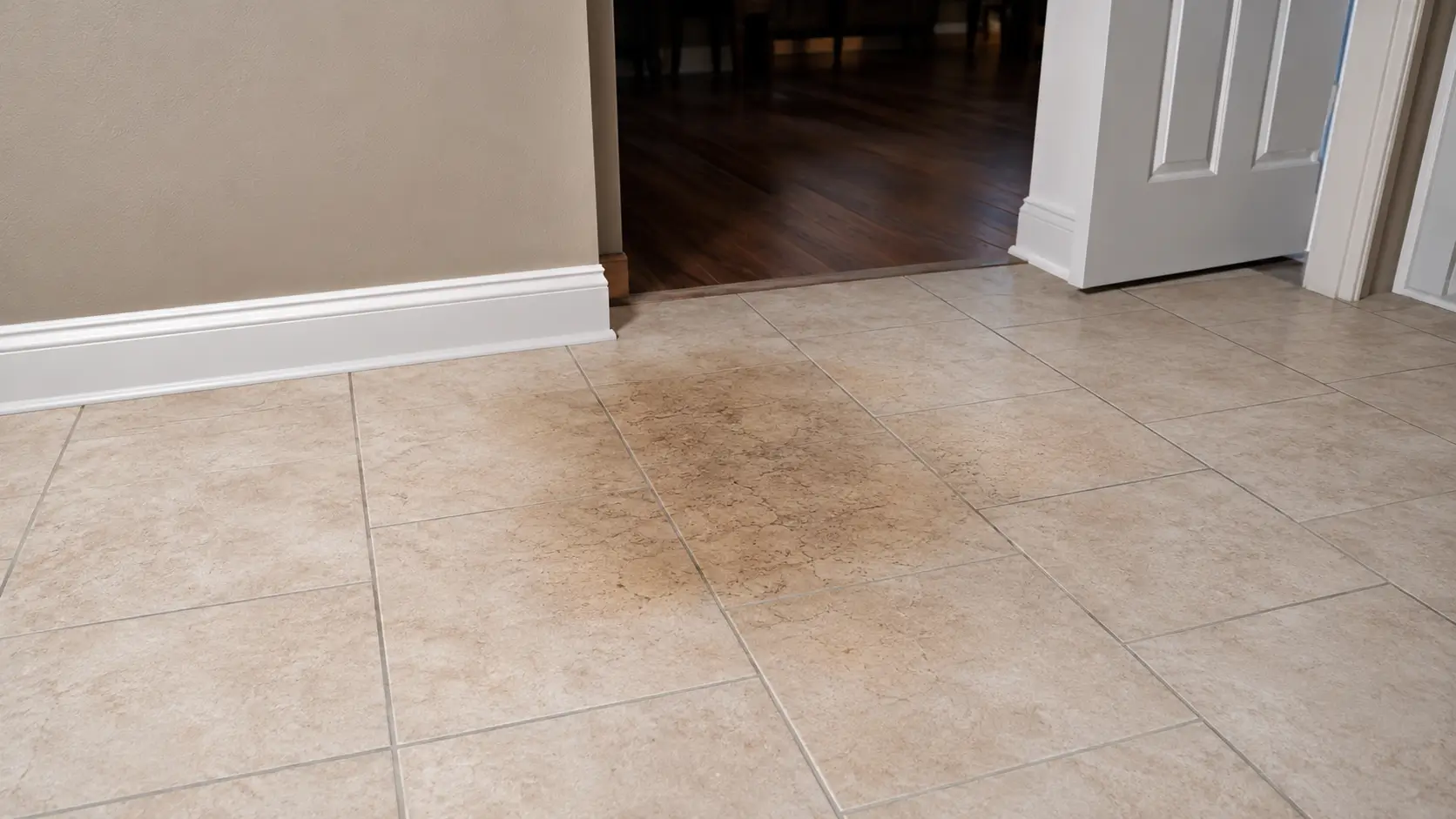
- Wet flooring
- Damaged drywall
- Ceiling stains or bubbling
- Cabinets or belongings affected
- The damaged pipe, if visible
- The shut-off valve
Then call a plumber and explain what happened.
Helpful details to provide include:
- Where you first noticed the water
- Whether the main water supply is off
- Whether the pipe is visible
- Whether the leak is inside a wall or ceiling
- Whether you noticed a sudden pressure drop
- Whether water is still appearing after the main supply was shut off
That information can help the plumber understand the urgency and where to begin looking.
How Can You Tell If a Pipe Actually Burst?
A burst pipe does not always spray water into the room.
The damaged section may be hidden inside a wall, ceiling, cabinet, or beneath the floor.
Possible warning signs include:
- Water suddenly appearing on the floor
- A wet wall or ceiling
- Bubbling or sagging drywall
- Hissing or rushing water sounds
- Sudden loss of water pressure
- Water appearing beneath a cabinet
- Dampness near the bottom of a wall
- An unexplained puddle near the foundation
If these symptoms appear suddenly, shut off the water rather than continuing to use fixtures while trying to locate the leak.
Should You Try to Repair the Pipe Yourself Before Calling?
Usually, no.
You do not need to cut open drywall, remove flooring, or attempt a permanent pipe repair before a plumber arrives.
Avoid:
- Cutting into walls to find the pipe
- Repeatedly turning the water on
- Using tape as a permanent repair
- Working around wet electrical equipment
- Ignoring water coming through a ceiling
A temporary measure may slow a small accessible leak, but the damaged section still needs to be properly inspected and repaired.
What Will the Plumber Do?
Once the immediate water flow is under control, the plumber can determine where the pipe failed and why.
Depending on the situation, the repair may involve:
- Locating the damaged section
- Accessing the pipe
- Removing the failed pipe or fitting
- Installing a replacement section
- Checking nearby connections
- Restoring water pressure
- Testing the repair for leaks
If the damaged pipe is hidden behind drywall, above a ceiling, or beneath the slab, additional leak detection or access work may be needed.
Why Do Pipes Burst in Georgetown Homes?
Freezing temperatures are one possible cause, but they are not the only reason a pipe can fail.
Other possible causes include:
- Excessive water pressure
- Aging or corroded plumbing
- Failed fittings
- Previous repairs
- Movement affecting water lines
- Damage to exposed plumbing
The cause matters because repairing the broken section may not solve the problem if another condition is putting stress on the plumbing system.
A plumber can determine whether the failure appears isolated or whether nearby pipes should also be inspected.
When Should You Call an Emergency Plumber?
Call for emergency plumbing help when:
- Water is actively spreading through the home
- You cannot shut off the water
- Water is coming through the ceiling
- You suddenly lose water pressure
- You hear water running inside a wall
- A pipe has visibly split or disconnected
- The leak appears to be beneath the slab
- Water is affecting several rooms
Do not wait to see whether an active leak stops on its own.
Need Burst Pipe Repair in Georgetown, TX?
If a pipe bursts, your first priority is stopping the water and keeping the area safe.
Shut off the main water supply, stay away from electrical hazards, relieve pressure in the plumbing system, protect belongings if it is safe, and then call a plumber.
Sosa Plumbing Services can inspect the source of the leak, repair the damaged pipe, and check the system before the water is restored.